
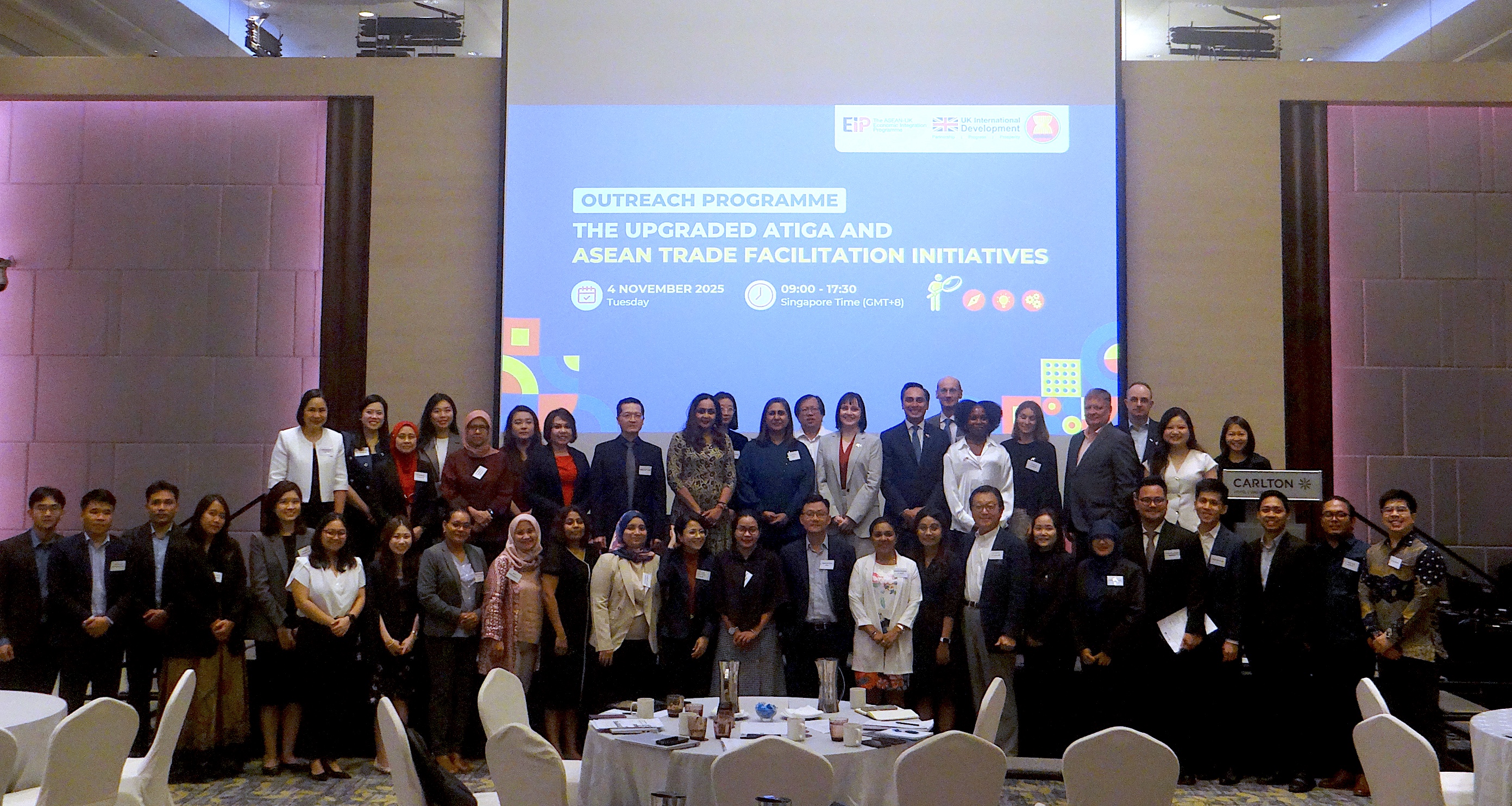
Open Trade
This Open Trade pillar seeks to lower barriers to trade (goods and services) between ASEAN Member States and with the rest of the world, particularly for MSMEs and trade digitalisation.
What is Open Trade?
The Open Trade Pillar (OTp) aims to increase trade between ASEAN Member States (AMS) and between ASEAN and the rest of the world. By addressing barriers to trade in ASEAN, particularly those faced by MSMEs, OTp seeks to contribute as a catalyst to advance economic integration in ASEAN.
OTp provides support in trade facilitation, customs simplification, paperless trade, and trade reforms to support the green, circular, and digital economy. Where relevant, the EIP prioritises digitalisation as a tool to address barriers. The programme also focuses on activities that support women’s and MSME engagement in regional trade.
Why it matters
Despite new free trade agreements and progress under ASEAN initiatives, trade in the region still faces significant barriers. Non-tariff measures and complex trade processes continue to raise costs. In the meantime, AMS must adapt quickly to new realities, including the rise of digital trade and e-commerce, paperless and simplified customs, green and circular economy, shifting global trade patterns, and growing sustainability demands.
How it works
The OTp delivers targeted support to ASEAN member states through technical assistance, capacity building, and knowledge-sharing. The programme primarily supports public officials from AMS and the ASEAN Secretariat, including members of relevant ASEAN sectoral bodies. It also engages businesses and individuals in the region, working in partnership with AMS governments. It will benefit low-income households and include a focus on MSMEs and women’s economic empowerment.
Support through the work of OTp will result in:
- Accelerated regulatory harmonisation across ASEAN and legal barriers to digital trade progressively removed
- ASEAN’s digital trade and customs ecosystem strengthened for faster, more efficient cross-border trade
- Transparency of non-tariff measures improved through digital tools, reducing intra-ASEAN trade barriers
- Trade made more inclusive and sustainable, with stronger participation by MSMEs and women
Related Insights & Updates
View All Posts
ASEAN–UK Economic Integration Programme: Launch of the EIP Office and Website
On 29 April 2026, the UK Government and ASEAN launched the ASEAN–UK Economi...
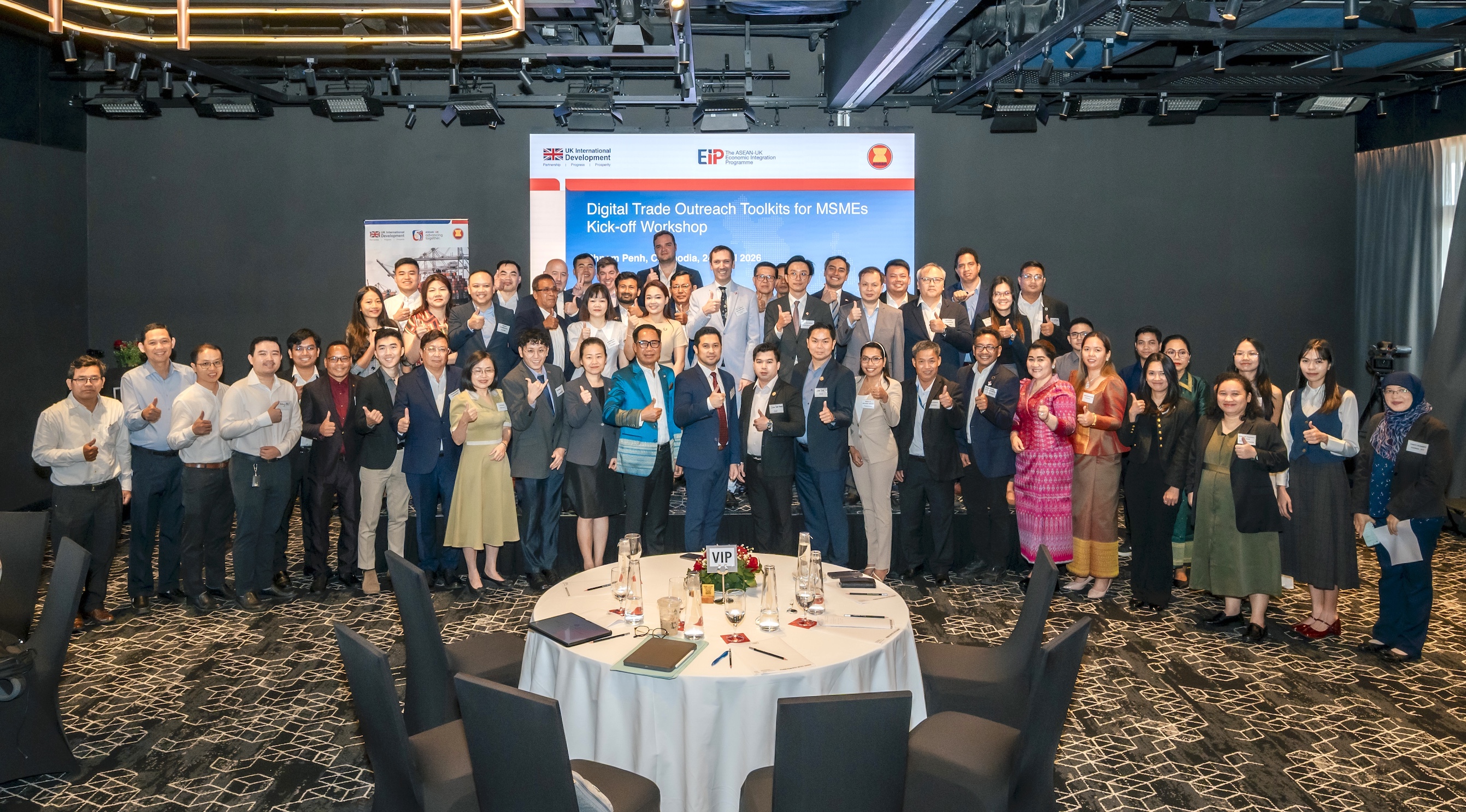
ASEAN’s MSMEs: Untapped Digital Power and a Race to Close the Gap
The UK government delivered a Digital Trade Toolkit workshop for Cambodia, Laos,...
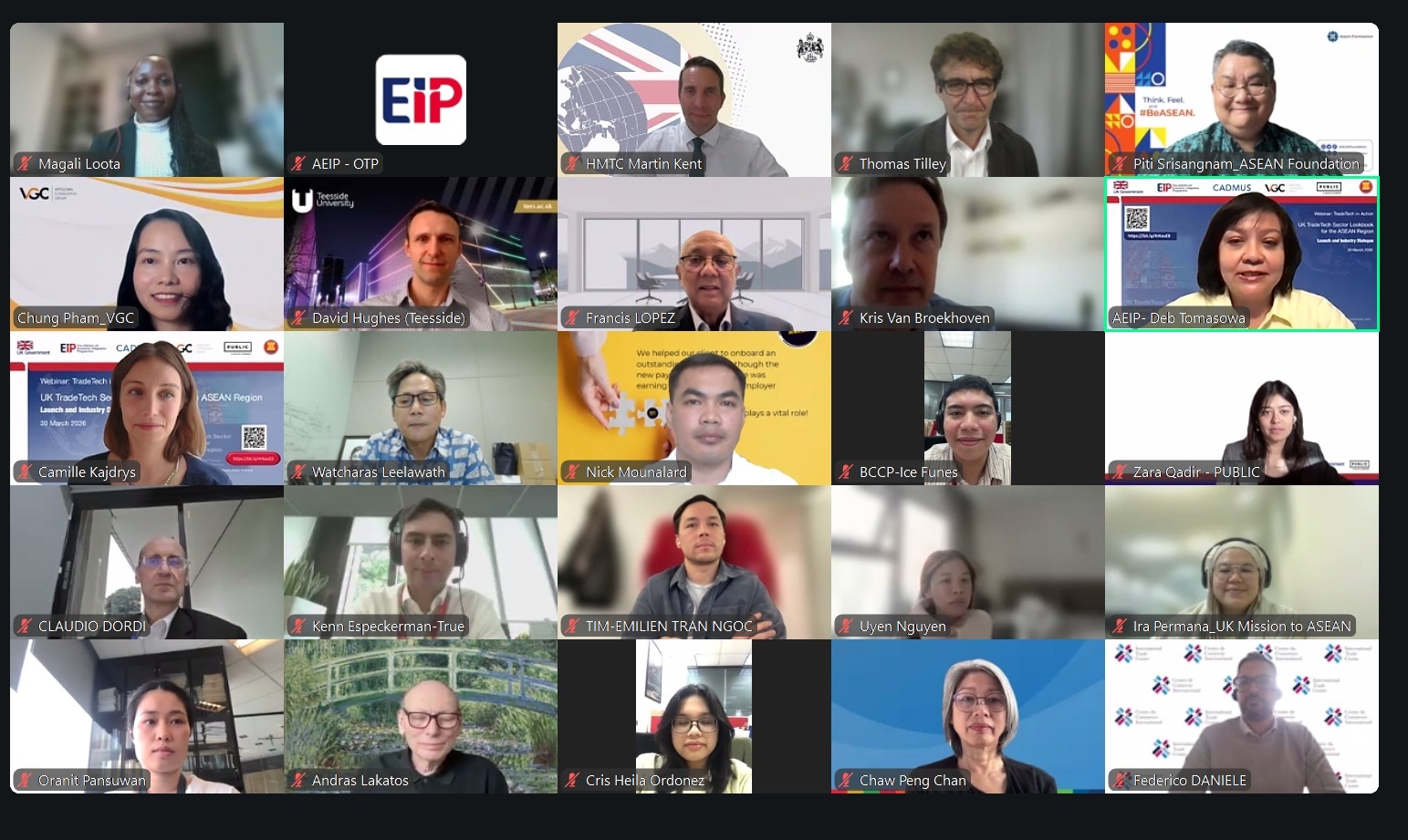
Connecting Solutions to Real Trade Challenges – How UK TradeTech Solutions Can Bridge the Gap in ASEAN Demand
On 30 March, over 60 representatives from government and industry across the UK...
